Zaheer

The Importance of App Development for SEO

The Importance of App Development for SEO

In today’s digital age, if you’re not optimizing your website for search engines, you’re missing out on a significant amount of traffic and potential customers. But with the rise of mobile devices and, consequently, mobile search, businesses must also focus on app development to complement their SEO efforts. This blog post will explain why app development is essential for SEO and the benefits it can bring to your business. Enhanced User Experience: One of the primary benefits of developing an app for your business is that it enhances the user experience. If your website is mobile-friendly, that’s a great start, but it’s no longer enough. An app can provide a streamlined, personalized experience that caters to your customers’ needs. This can translate into longer sessions, more engagement, and higher conversions—the metrics that search engines look for when ranking websites. To learn more about User Experience click here. Increased Visibility in App Stores: Developing an app also increases your visibility in the app stores. Just like with search engines, app stores have algorithms that prioritize apps based on various factors like keywords, ratings, and downloads. By optimizing your app for these factors, you stand a better chance of appearing in the top search results, which can bring in a steady stream of organic traffic. Learn more about this topic at https://drmongo.com/ More Opportunities for Links and Social Shares: Developing an app also opens up more opportunities for link building and social sharing. When people find value in your app, they’re more likely to share it with their friends and family or link to it on their blogs or websites. This can help increase your domain authority, which, in turn, can help boost your website’s rankings. Access to Valuable User Data: Developing an app also gives you access to valuable user data, like user behavior, preferences, and location. By analyzing this data, you can gain insights into what your customers want and tailor your SEO strategy to meet their needs. For example, if you notice that your app users frequently search for a specific product or service, you can create content that targets those keywords and improves your chances of ranking for them. Long-Term Engagement: Finally, developing an app can lead to long-term engagement with your customers. By providing a unique, personalized experience, you can build brand loyalty and keep your customers coming back for more. This can lead to higher customer lifetime value and fewer customer losses, which can ultimately impact your bottom line. Conclusion: In conclusion, app development should be an essential part of any business’s SEO strategy. By providing a unique, personalized experience for your customers, you can improve engagement, increase visibility in app stores, and gain access to valuable user data. These factors can help boost your website’s rankings, drive more traffic to your website or app, and ultimately, increase revenue. So, if you haven’t already considered developing an app for your business, now is the time to start.

The Basic Guide to SEO - Everything You Need to Know

The Basic Guide to SEO – Everything You Need to Know

Search Engine Optimization, or SEO, is the practice of increasing the amount and quality of the traffic to your website through organic search engine results. Regardless of the type of business or website, having a good understanding of SEO is essential to generate traffic to your website. In this blog post, we will be discussing the basics of SEO, from what it is to how you can improve it to increase your website visibility. What is SEO? Simply put, SEO means making changes to your website’s backend and content to make your website more attractive to search engines. The objective is to increase the quantity and quality of traffic to your website by making it appear at the top of search results. SEO involves using specific keywords, backlinks, and optimizing content to increase visibility. How do search engines work? Search engines utilize algorithms to index web pages and determine which ones are most relevant to a given query. The algorithm considers factors such as relevance, page speed, user-friendliness, and relevance of content. SEO aims to optimize your website in such a way that search engine algorithms find it to be the most relevant for queries at the top of the search results. To learn more about SEO click here. On-page SEO On-page SEO refers to optimizing your website’s content and structure to make it more attractive to search engines. The key elements of on-page optimization include optimizing content, title tags, meta descriptions, internal/external links, and headers. Off-page SEO Off-page SEO refers to the activities that take place outside your website to improve your site’s ranking. This includes backlinking, social media promotion, and other forms of link building. The goal of off-page optimization is to increase your website’s domain authority, making it easier for the algorithms to index and rank your site. Learn more about SEO at https://drmongo.com/ Effective SEO practices Effective SEO requires a combination of practices, the most important of which are keyword research, content creation, and site reputation management. It’s essential to ensure that your website has high-quality, relevant content that’s optimized for search engines, and the practice of keyword optimization should be centered around authoritative content. Focusing on site reputation management ensures that your domain has a good reputation and that other authoritative websites link back to your site, further improving your domain authority. Conclusion: SEO is crucial for your site’s success, and understanding the basics is the key to improving its visibility on search engines. Keep in mind that optimizing your website for SEO is an ongoing process that requires patience, dedication, and effort. Take the time to learn about keywords, content creation, and optimization and backlinking as they are all essential components for great SEO and a successful website.

The Importance of Web Development in Achieving Maximum SEO

The Importance of Web Development in Achieving Maximum SEO

Web development and SEO are two things that are closely intertwined. In fact, one cannot exist without the other. Like a match made in heaven, web development and SEO come together to deliver an amazing online experience for users. This is the reason why website owners are seeking the support of experts for developing SEO-friendly websites. In this blog post, we will discuss the importance of web development in achieving maximum SEO. Enhances user experience Web development plays an important role in enhancing the user experience. A well-developed website will load faster, have intuitive navigation, smooth functionality, and will be easily accessible on different devices and browsers. The design and development of your website can either attract or repel visitors. A well-developed website ensures that visitors stay longer on your website, which is the key factor in achieving maximum SEO. Learn more about user experience at https://www.usability.gov/what-and-why/user-experience.html Enables website maintainability Web development is not a one-time process, as a website always requires regular maintenance. A well-developed website, however, makes it easier to maintain. It makes it easier to update the website with fresh content, modify web pages, and address errors that might arise from time to time. A well-maintained website can increase traffic and improve search ranking, which is another important aspect of SEO. Facilitates search engine optimization Web development provides a foundation for SEO. It is the process of optimizing website content and structure to make it more search-friendly. This is necessary because search engines like Google use algorithms to rank websites based on various parameters. A well-developed website has the ability to make it easy for search engine algorithms to navigate the website and index the pages quickly. This leads to increased visibility and search ranking. Enables mobile responsiveness In today’s world, more and more internet users use their mobile devices to access websites. A well-developed website ensures that it is mobile responsive, i.e., it adjusts to the screen size of the device on which it is accessed. Categorically, a mobile-responsive website is preferred by Search Engines, as it provides seamless user experience irrespective of the device used. A completely responsive website delivers the same user experience on a desktop or mobile device, leading to higher search rankings. Ensures faster page loading Another important factor in website development is page loading speed. A well-developed website ensures that its pages load faster. Site speed is one of the important factors for SEO, as faster loading speeds are preferred by both visitors and search engines. A fast-loading website not only improves overall user experience but also leads to higher search rankings. To learn more about Web Development click here. Conclusion: Web development plays a crucial role in achieving maximum SEO. It provides the foundational structure and necessary framework to build an SEO-friendly website. A well-developed website enhances user experience, increases maintainability, facilitates search engine optimization, ensures mobile responsiveness, and guarantees faster page loading. With the growing importance of Search Engines in the online world, web development is more critical than ever. All website owners should, therefore, seek to work with reputable web design companies that understand the intricacies of Search Engine Optimization. By doing so, they can maximize the benefits of web development to improve their online presence and increase their chances of ranking high on leading search engines.

Understanding React Native App and Its Benefits

Understanding React Native App and Its Benefits

React Native is an open-source platform to build mobile apps using JavaScript. It was developed by Facebook to create applications that can be used in both iOS and Android platforms using a single codebase. It is an excellent choice for developers to build native, fast, and efficient applications. However, one of the most popular features of React Native is its ability to allow developers to reuse 90% of the code across different platforms, thereby reducing the development time, effort, and cost of building mobile applications. In this blog post, we will discuss the benefits of React Native App and why it would be a great choice for your next mobile application project. Cross-Platform Compatibility: React Native is a cross-platform framework, which means that a single codebase can be used for both iOS and Android platforms. This is a huge advantage for businesses that want to build their applications for both platforms while saving development costs. It allows developers to reuse code, which results in a faster development process, not to mention it saves the hassle of rewriting the entire codebase for a new platform. Learn more about React Native at https://drmongo.com/ Code Reusability: The ability to reuse code is one of the major benefits of React Native. It allows developers to write code once and use it across multiple platforms. This not only saves a lot of time and effort but also ensures consistent app quality across different platforms. Moreover, the codebase remains consistent, making it easier to maintain and update. Faster Development Cycle: The development process of a mobile app can take a lot of time, effort, and money, especially when the app is for both iOS and Android platforms. However, React Native can significantly reduce the development time by allowing the usage of a single codebase. This means that developers don’t have to write code from scratch for each platform. Instead, they can write a codebase that works for both iOS and Android platforms. To learn more about the development Process click here. Better Performance: React Native is a framework that builds natively rendering mobile apps for both iOS and Android platforms. As a result, it provides better performance than other cross-platform frameworks. With its capability of reusing the same codebase across multiple platforms, it optimizes code performance and reduces the chances of errors. Large Community Support: React Native has a vast community of developers who actively contribute to the platform. This means that developers have access to numerous tools, libraries, and resources for creating mobile apps. The community is growing at a fast pace, making it a reliable platform for building high-quality mobile apps. Conclusion: React Native is an excellent choice for building mobile applications that work on both iOS and Android platforms with a single codebase. Developing an app with React Native offers many benefits, including cross-platform compatibility, code reusability, faster development cycle, better performance, and a large community support network. So, if you’re planning to build a mobile application, React Native can significantly reduce your development time, effort, and cost while building a high-quality app that performs efficiently across multiple platforms.

Visual Hierarchy

What is UX: User Experience Design Principles

User experience design (UXD) is the practice of designing and developing digital products that provide meaningful and relevant experiences to their users. While UXD has been around for many decades, it has become increasingly popular as technology advances, allowing brands to create exciting user experiences that keep customers coming back. At its core, UXD is focused on creating positive interactions between a user and a product. This is achieved by understanding user needs, creating intuitive user interfaces (UI) that are easy to navigate, and testing different designs to ensure the best possible customer experience. UXD involves looking at a range of factors including usability, accessibility, emotional design and ergonomics. These elements combine to create an enjoyable journey for users as they interact with a product. UXD practitioners have many tools at their disposal to help them create the best possible experience for their users, from wireframing and prototyping to user testing and analytics. The end goal is to ensure that users can get what they need as quickly and efficiently as possible. As technology continues to evolve, UX designers must stay up-to-date on the latest trends and tools to create the best experiences for their customers. This could include incorporating virtual reality, voice user interfaces, artificial intelligence and more into their designs. UX design is an ever-evolving field that requires constant learning and experimentation to stay ahead of the game. By staying on top of emerging trends and technologies, UX designers can ensure that their customers have a great experience with their products. The Role of Front-End Development in UX Design Front-end development plays an important role in UX design. It involves creating the code that makes a website or app look and function as intended. Good front-end developers understand how to implement effective designs while also keeping the user in mind. Front-end developers need to ensure that the code they write is up-to-date and efficient, as this will have a direct impact on the user experience. This includes using the right coding language and tools for the job, as well as ensuring that the code is properly tested before it’s deployed. Front-end development also involves working closely with other developers, designers and UX practitioners to ensure that the code is properly integrated into the design. This collaborative approach enables teams to create high-quality experiences for users on all platforms. Understanding User Needs and Goals At the heart of UXD is understanding user needs and goals. This involves gathering data about users’ behaviors, preferences and expectations, as well as getting to know their motivations for using a product or service. UX designers use this data to create designs that are tailored to the user’s needs and help them accomplish their goals more easily. This could include providing helpful feedback, simplifying navigation, or creating visual cues that guide users through the product. By understanding their customers’ needs and goals, UXD practitioners can create products that meet their customers’ expectations and keep them coming back for more. Usability and User-Centered Design Usability and user-centered design are two key concepts in UXD. Usability is all about making sure a product is easy to use, with features that are intuitive and straightforward. User-centered design, on the other hand, focuses on creating products that are tailored specifically to users’ needs and goals. By combining usability principles with user-centered design, UXD practitioners can create experiences that are both satisfying and successful for their users. Visual Hierarchy and Information Architecture Visual hierarchy and information architecture are two important aspects of UXD. Visual hierarchy helps designers create a clear path for users to follow, while information architecture organizes content in a way that makes it easy to find and understand. By properly organizing content with visual hierarchy and information architecture, UX designers can ensure that their customers can easily find what they’re looking for and have a pleasant experience while doing so. Accessibility in UX Design Accessibility is another important aspect of UXD that should not be overlooked. It involves creating user experiences that are accessible to people of all abilities, including those with physical disabilities, visual impairments, hearing loss, and more. Creating an accessible experience requires careful consideration of accessibility principles and user needs. UX designers should take into account the needs of all potential users when creating a product, not just those who are able-bodied. By following accessibility best practices, brands can ensure that their products are usable by everyone, regardless of their abilities or limitations. Enhancing User Engagement and Delight The ultimate goal of UXD is to create products that are engaging and enjoyable for users. To achieve this, UX designers should strive to enhance user engagement and delight by creating a unique and memorable user experience. This could include incorporating interactive elements such as animations, gamification or augmented reality into the design. It could also mean providing helpful feedback or introducing unexpected surprises that delight the user. By creating engaging experiences for users, brands can ensure that their customers remain engaged and satisfied with their products. User Experience Design – FAQs What is user experience design (UXD)? User experience design (UXD) is the practice of creating products that provide a positive and enjoyable experience for users. UX designers consider a range of factors such as usability, accessibility, emotional design and ergonomics when developing products. What are some tools used in UXD? UX designers use a range of tools to create interactive and engaging experiences for users. This includes prototyping and wireframing tools, usability testing tools, analytics software, virtual reality platforms, and more. What is the difference between UX design and UI design? UX design is focused on creating products that are enjoyable and satisfying for users, UX designers use a range of techniques to understand user needs and create designs that meet those needs. This includes conducting research, creating prototypes and testing the product with users. UI design is focused on creating visual elements that are aesthetically pleasing to users. This includes selecting colors, layouts, typography, icons and other visual elements. UI designers

How to Import CSV Files into MongoDB: A Step-by-Step Guide for Business Owners

As a business owner or entrepreneur, you may be gathering an enormous amount of data on a daily basis. Whether you’re tracking sales transactions, inventory data, or customer feedback, databases like MongoDB are the perfect solution for storing and managing large amounts of structured and unstructured data. One of the most popular ways of entering data into a MongoDB database is by importing CSV files. CSV (Comma Separated Values) files are a widely used file format for storing data in a structured way. In this blog post, we’ll guide you through the process of importing CSV files into your MongoDB database. To make the process of importing CSV files into MongoDB more user-friendly, you should use a CSV importer tool. Step 1: Prepare Your CSV File Before you can start importing your CSV file into MongoDB, you need to ensure that it is formatted correctly. The first row of your CSV file should list the column headers. Also, make sure that the data in your file is free of errors or blank cells. You can use Excel or Google Sheets to edit your files before importing them into MongoDB. Step 2: Create a New MongoDB Database If you don’t have an existing database, create a new one with MongoDB Compass (a client application for MongoDB). On the left sidebar, click the “Create Database” button, and choose a name for your database. You can also create collections (similar to tables in relational databases) within your database. Step 3: Import Your CSV File Once you’ve prepared your CSV file and created a new MongoDB database, import your CSV file into a collection by following these simple steps: In MongoDB Compass, select the database where you want to import your CSV file. Click on the “Add data” button and select “CSV”. Browse for the CSV file that you want to import and select it. Choose the relevant collection you wish to upload the CSV file to, and then click “Next”. Confirm the fields and data types, then click “Import”. Step 4: Verify Your Data After you’ve imported your CSV file into MongoDB, verify your data is correctly structured and free of errors. To view your data, simply select the collection you want to view, and MongoDB will display all the rows and columns in the collection. You can also use MongoDB queries to search for specific data according to specific criteria. Step 5: Use Your Data Now that your data is stored in MongoDB, you can use it for various purposes, such as generating reports, tracking inventory, or analyzing customer feedback. You can also connect your MongoDB database to third-party business apps (such as BI dashboards), thereby automating the data extraction and analysis process. Conclusion With the guidelines mentioned above, importing CSV files into MongoDB can be a breeze, even for non-technical business owners. Once your data is stored in MongoDB, you have a powerful tool capable of scaling with your business. Whether you need to track sales transactions or analyze customer behavior, MongoDB provides the flexibility, scalability, and performance you need to keep your business running smoothly. So, don’t hesitate to incorporate MongoDB into your business workflow today.

Top React Native App Developers: Your Guide to Building an Impressive Mobile App

Top React Native App Developers: Your Guide to Building an Impressive Mobile App

In today’s digital age, having a mobile app for your business is a necessity. From retailers to healthcare providers, everyone is making the transition to mobile apps to reach their target audience easily and effectively. React Native app development is one of the most popular frameworks to create reliable, fast, and cross-platform mobile apps. Many businesses choose React Native app developers to ensure their mobile app is responsive, user-friendly, and functional. This blog will provide you with a comprehensive list of the best React Native app developers who can help you create top-notch mobile apps for your business. MindInventory: MindInventory is a popular name in the mobile app development industry known for developing innovative and reliable mobile apps. With their years of experience, the company has become one of the go-to React Native app developers in the market. Their team of developers and designers will work closely with you to understand your requirements and create an app accordingly. Fueled: Fueled is another well-known name in the mobile app development industry. They are known for their quality work and timely delivery of projects. Fueled has a team of skilled React Native app developers who can create a seamless user experience for your mobile app. They are also known for creating visually stunning and interactive apps. Art + Logic: Art + Logic has been around for more than 25 years. They are known for their custom software development services and are now known as one of the best React Native app developers. They have a team of expert developers who are well-versed in React Native app development. Art + Logic’s developers use the latest technology and trends to create robust and engaging mobile apps. Konstant Infosolutions: Konstant Infosolutions is another popular choice when it comes to React Native app development. They have been in the industry for over 17 years and have developed many state-of-the-art mobile apps. Konstant Infosolutions has a team of skilled developers who can create custom solutions to meet your business’s unique needs. They are also known for their timely delivery and cost-effective solutions. To learn more about this topic click here. TechMagic: TechMagic is a software development company with expertise in React Native app development. They are known for creating cutting-edge and innovative mobile apps. They have a team of skilled React Native app developers who use the best practices and latest technology to create high-quality apps. They are also known for their Agile development methodology, which ensures timely delivery and quality work. Conclusion: React Native app development is a great choice for businesses who want to ensure their mobile app is reliable, responsive, and user-friendly. Hiring a professional React Native app developer will ensure your app looks great and functions properly on both platforms (iOS and Android). These top React Native app developers mentioned in this blog post can help you build impressive mobile apps that will help you stand out from the crowd and reach your target audience effectively. Learn more about React native at https://brainhub.eu/library/react-native-apps

React Native

How to Choose the Right React Native Development Company for Your Mobile App Project

React Native is a popular open-source mobile application development framework that has been used by companies around the world to build stunning mobile apps. If you’re looking for a React Native development company to help you with your mobile app project, it can be overwhelming to sift through the plethora of options available. In this blog post, we’ll discuss some tips on what to look for in a React Native development company. Extensive Experience The first thing to look for in a React Native development company is their level of experience. The more experience they have, the better equipped they are to handle your mobile app project. When researching potential development companies, check out their portfolio of completed projects to see if they’ve worked on projects similar to yours. Additionally, it’s essential to verify that the React Native development company has experience in the niches of your app and can cater to your specific needs. Competence and Skills React Native development must be performed by developers who have experience and skills in this technology. You want a company that has a team of experts that are skilled in React Native. Hiring an inexperienced React Native development company with limited coding knowledge can lead to trouble and expense in the long run. Make sure to ask about their developers’ experience, what kind of projects they’ve worked on, and the expertise they have in other specialized skills like UX/UI design and backend development. Communication and Collaboration Being in a seamless understanding with your React Native development team through the project lifecycle is crucial for the project’s success. The development company must communicate regularly and transparently to ensure that they understand your needs and objectives while keeping you updated on the project’s progress. The best companies for React Native development show enthusiasm for collaborating with clients. They take feedback constructively and implement it appropriately to offer the best results. To learn more about React Native Development click here. Cost and Maintenance The last factor to consider but equally crucial is the pricing of the React Native development company’s services. Get to know the payment structure and payment terms. The development team must clarify the development costs, timelines, estimated hours required for development, and support and maintenance post-deployment costs. Try to avoid selecting firms solely based on their price range. Instead, choose a company that aligns with your budget and provides a plan that fits your long-term goals. Conclusion: Choosing a React Native development company can feel overwhelming, but if you keep these key factors in mind, you can find the best fit for your mobile app project. Focus on a development company that has extensive experience, expertise, communication and collaboration, and transparency in pricing and services. Be sure to research and check references before hiring a React Native development company to secure your project’s success. With the right development company on your side, you can bring your unique mobile app vision to life. Learn more about this topic at https://drmongo.com/

How to create an app in MongoDB?

How to create an app in MongoDB?

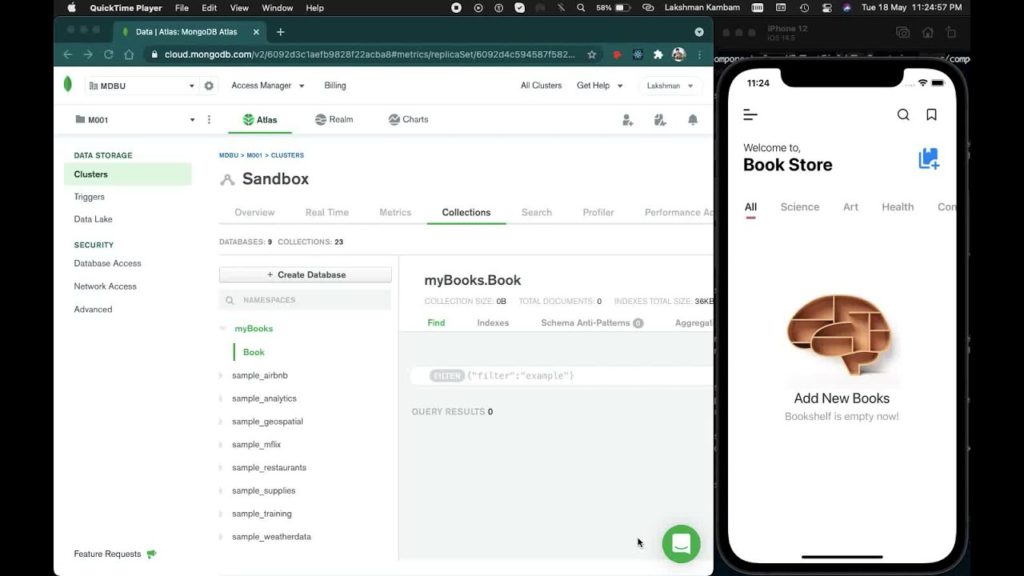
MongoDB is a powerful and popular NoSQL database that has been used to create a variety of web and mobile applications. It provides a flexible and scalable platform for managing large amounts of unstructured data, making it a perfect fit for modern app development. In this article, we will explore the steps involved in creating an app in MongoDB, with a focus on reactjs developers. Step 1: Define the App Requirements The first step in creating an app in MongoDB is to define the requirements. This involves identifying the features, functionalities, and user experience that the app will provide. As a ReactJS developer, it is essential to have a clear understanding of the front-end requirements, including the UI/UX design, user flows, and navigation. At the same time, you will need to work closely with the back-end developers to ensure that the app’s data management requirements are clearly defined. This will involve identifying the data models, relationships, and access controls needed to manage the app’s data. Step 2: Design the App Architecture Once the requirements are defined, the next step is to design the app architecture. This involves deciding on the technologies, frameworks, and platforms that will be used to build the app. As a ReactJS developer, you will need to work closely with the back-end developers to ensure that the front-end and back-end technologies are compatible. MongoDB is a great choice for the back-end database, as it provides the flexibility and scalability needed to manage large amounts of unstructured data. It also has a robust set of tools and integrations that make it easy to develop and manage the database. For the front-end, ReactJS is an ideal choice for building modern, dynamic user interfaces. It provides a powerful set of tools and features that make it easy to develop and maintain complex UI components. Step 3: Set Up the MongoDB Database With the app requirements and architecture defined, the next step is to set up the MongoDB database. This involves creating the database schema, defining the data models, and setting up the access controls. MongoDB provides a flexible schema that makes it easy to store unstructured data. This means that you can store data in the database without having to define a strict schema beforehand. However, it is still essential to define the data models and relationships to ensure that the data is stored and retrieved correctly. As a ReactJS developer, you will need to work with the back-end developers to define the API endpoints that will be used to access the database. This will involve defining the CRUD operations (Create, Read, Update, Delete) and setting up the authentication and authorization controls. Step 4: Build the Front-End User Interface With the back-end database set up, the next step is to build the front-end user interface. This involves creating the UI components, integrating them with the back-end API, and testing the UI for usability and functionality. ReactJS provides a powerful set of tools and features that make it easy to develop complex UI components. This includes tools for state management, routing, and data binding, which can be used to build dynamic, responsive user interfaces. As a ReactJS developer, you will need to work closely with the UI/UX designers to ensure that the UI components are aligned with the app’s design requirements. You will also need to test the UI components for usability and functionality, ensuring that they work seamlessly with the back-end API. Step 5: Integrate the Front-End and Back-End With the front-end and back-end components built, the final step is to integrate them and test the app as a whole. This involves ensuring that the front-end UI components can communicate seamlessly with the back-end API, and that data is being stored and retrieved correctly. Related: What is difference between SQL and MongoDB?

What is difference between SQL and MongoDB?

What is difference between SQL and MongoDB?

SQL and MongoDB are two popular database systems that serve different purposes and have distinct differences. SQL, or Structured Query Language, is a relational database system, while MongoDB is a NoSQL database system. Both have their advantages and disadvantages, and choosing between the two depends on the specific needs of a project. In this article, we will explore the differences between SQL and MongoDB, with a focus on how ReactJS development companies can benefit from using either system. Data Modeling One of the main differences between SQL and MongoDB is how they handle data modeling. SQL uses a table-based approach, where data is organized into rows and columns. Each table represents a specific entity, and relationships between entities are managed through foreign keys. This makes SQL ideal for managing structured data, such as financial records, inventory, or customer data. On the other hand, MongoDB is a document-oriented database that stores data in JSON-like documents. Each document can have a different structure, which makes it suitable for managing unstructured data, such as social media feeds, user-generated content, and machine-generated data. This also makes it easier to add or modify fields without having to alter the entire schema. As a reactjs development company, the choice of data modeling system will depend on the type of data being managed. If the data is structured, then SQL may be the better choice. If the data is unstructured, then MongoDB may be the better choice. Scalability Another key difference between SQL and MongoDB is scalability. SQL databases are vertically scalable, which means that they can only handle more traffic by adding more resources, such as CPU, RAM, or storage. This can lead to performance issues, as the database becomes more complex and requires more resources to maintain. On the other hand, MongoDB is horizontally scalable, which means that it can handle more traffic by adding more servers to the cluster. This makes it ideal for managing large volumes of data, as it can distribute the load across multiple servers. As a ReactJS development company, the choice of scalability system will depend on the expected traffic and data volume. If the project is expected to handle large volumes of data, then MongoDB may be the better choice. Query Language The query language is another difference between SQL and MongoDB. SQL uses a standardized query language that is used to extract and manipulate data from the database. This makes it easy to use and widely adopted, as developers can easily switch between different SQL databases. On the other hand, MongoDB uses a proprietary query language that is designed to work with JSON-like documents. This makes it easy to work with unstructured data, as the query language can handle complex structures and nested documents. As a ReactJS development company, the choice of query language will depend on the type of data being managed. If the data is structured, then SQL may be the better choice. If the data is unstructured, then MongoDB may be the better choice. Flexibility Flexibility is another key difference between SQL and MongoDB. SQL databases require a predefined schema, which means that the data model needs to be defined upfront. This makes it difficult to modify the schema once the database is in use. On the other hand, MongoDB does not require a predefined schema, which makes it easy to store data of any type and structure. This makes MongoDB ideal for managing large amounts of unstructured data, such as social media feeds, user-generated content, and machine-generated data. As a ReactJS development company, the choice of flexibility system will depend on the type of data being managed. If the data is unstructured, then MongoDB may be the better choice. Related: How to create an app in MongoDB?